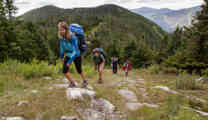
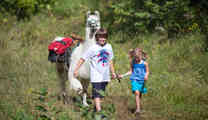
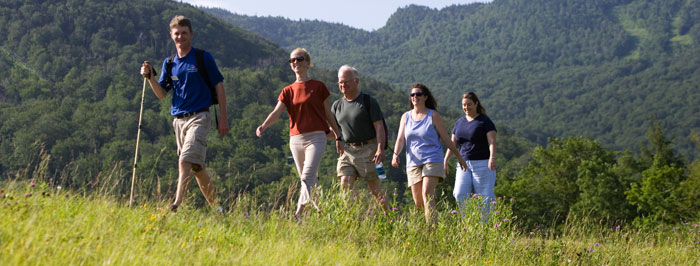
We provide this hiking information to allow you to explore some of Vermont's forests and pristine countryside.
To fully enjoy your hiking itinerary there are a few things to remember before starting these adventures:
Never hike alone. Always leave your hiking plans with a friend.
Familiarize yourself with the trail route. Stay on designated trails. Trail maps are recommended and are available in 3 Mountain Outfitters.
Always check a local weather forecast before departing.
Stretch before and after your hike to prevent injury. See suggested stretches.
Zigzag the trail when ascending and descending steep terrain to avoid excessive muscle strain.
Only drink water that you have brought with you.
The following is a suggested list of equipment, clothing and other items:
Hiking boots or shoes with good tread. Boots are recommended for hikes as they offer better traction, cushioning and ankle support.
Backpack is suggested to carry your supplies, extra clothes, food and water. A frameless nylon day pack works well.
Layered clothing made of wool or synthetic (polyester, polar fleece, etc.) is most efficient in protecting you from the weather and can be removed or added as needed. Cotton is not recommended for warmth as it is cold when wet.
Essential — Short-sleeved shirt (if cotton, pack an extra one, cotton acts as a sponge), wool sweater or fleece, shorts and long pants (not jeans), hiking or wool socks, rain resistant/proof wind breaker or rain jacket.
Additional recommendations, especially for mountain tops — heavier fleece jacket or shirt, rain proof jacket and pants, hat and gloves/mittens.
Water — 2-3 quarts per person is highly recommended for a hike. Drink plenty of water before departing and keep yourself hydrated to prevent dehydration which can lead to medical problems.
Food — Pack high energy snacks and a lunch. You will need to replace the calories you burn as you hike.
First Aid Kit — for any small emergencies. It should also contain sunscreen and insect repellent.
Please Note: ()Temperatures are usually much cooler on mountain tops than at the Village and weather conditions can change drastically in a short time. Also, as it is unsafe to drink the water from the streams, you will need to carry the recommended amount with you.
Call direct for the best price
Send me Emails & News
Receive updates on Smuggs news, events, and special offers.